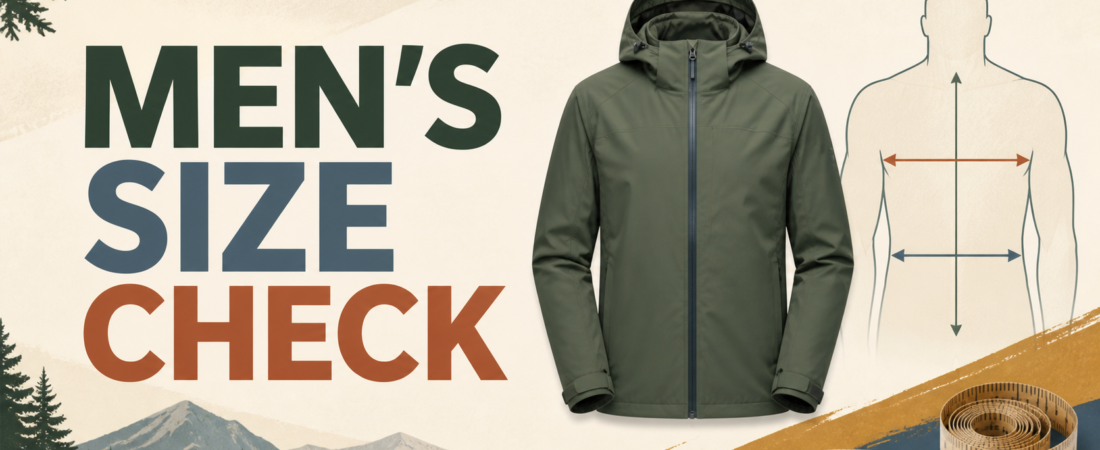
Quick answer: The North Face Korea men’s sizes often use numbers such as 90, 95, 100, 105 and 110, but those numbers are not a universal international conversion. Compare your best-fitting garment with the exact Korean product’s measurements, then allow room for layers and the intended fit.
Independent guide to comparing men’s jacket measurements and layers. The product example is based on the linked official listing, not a physical fit test. Measurements and size availability vary by model and season.
How Korean Men’s Sizes Work
A common sequence on Korean men’s product listings is 090(S), 095(M), 100(L), 105(XL) and 110(XXL). Some products add 085(XS), 115(XXXL), women-specific options or a different sequence. The label is only a starting point; the actual garment table is the decision tool.
Source Example: MARI-ON Jacket NJ3NR57B
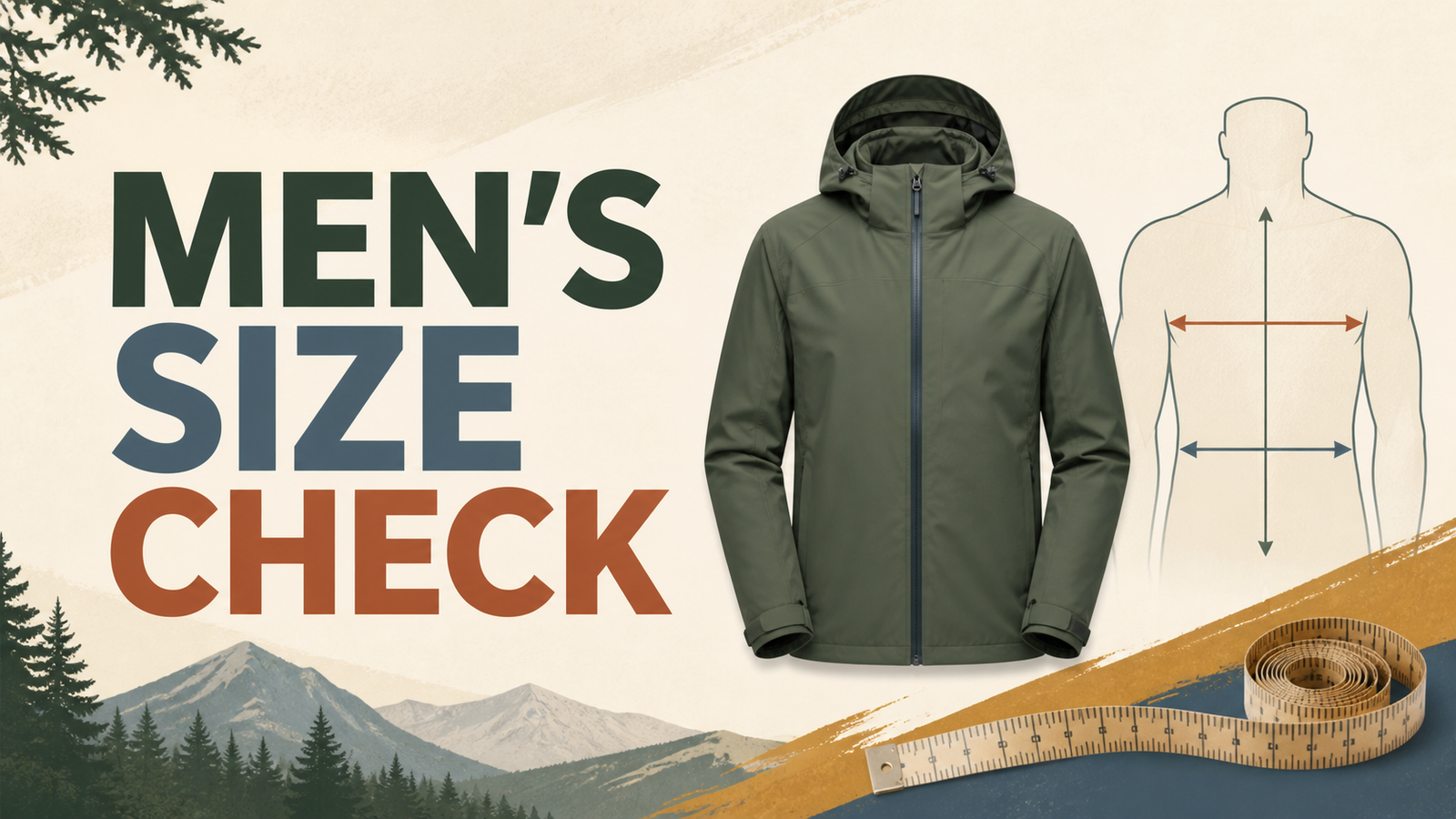
The official Korean page for the men’s MARI-ON jacket, model NJ3NR57B, lists the sequence 085 (XS), 090 (S), 095 (M), 100 (L), 105 (XL) and 110 (XXL). This is useful evidence for that product, but it is not a universal conversion chart for every men’s jacket. Another model may be unisex, intentionally oversized or offered in a shorter size run.
The same official page notes that detailed product measurements are stated in centimeters and may vary slightly according to the measuring method. That is why a labeled “100 (L)” should be treated as a starting point. The flat garment measurements provide the better comparison.
How to Measure a Jacket You Already Own
- Choose a similar jacket that already fits the way you want.
- Zip it, empty the pockets and lay it flat without stretching the fabric.
- Measure pit to pit across the chest, then double it only if the official chart uses circumference.
- Measure shoulder width from seam to seam when the seams are clearly defined.
- Measure sleeve length using the same start and end points described by the seller.
- Measure back length from the base of the collar to the hem.
- Write down the intended layer: T-shirt, fleece or insulated mid-layer.
Measurement definitions matter. Raglan sleeves may be measured from the neck rather than a shoulder seam, and drop-shoulder jackets can appear unusually wide. When the official diagram is available, follow its arrows instead of mixing methods.
Match the Measurement Comparison to Your Layers
Ease is the extra room between your body and the garment. A close casual jacket needs less ease than a winter shell worn over fleece. Rather than adding a fixed number for everyone, compare your reference jacket with the product measurements and decide where you need room.
- T-shirt or thin shirt: prioritize the shoulder and chest shape you normally enjoy.
- Fleece underneath: check chest, upper arm and sleeve length while wearing a similar layer.
- Down or insulated jacket: avoid compressing the insulation by buying too tight.
- Rain shell: allow movement at the shoulders and elbows without making the hem or cuffs impractical.
- Oversized fashion fit: compare body length as carefully as width; sizing up can make sleeves and hem much longer.
Diagnose a Mismatch Before Sizing Up
| Compared with your reference jacket | What to check next |
|---|---|
| Chest looks suitable; sleeve is shorter | Confirm the sleeve measuring method. Check the next size’s chest and body length before increasing size. |
| Chest is wider; body is shorter | Check whether the cut is boxy or cropped. A larger size may add width without producing your preferred proportions. |
| Chest is similar; thicker layers are planned | Try those layers under the reference jacket and assess arm movement. Similar external dimensions alone do not guarantee equivalent interior room. |
| Shoulder width seems unusually large | Check for dropped shoulders or raglan construction before comparing shoulder and sleeve numbers separately. |
| Used item differs from the published chart | Request measurements of the actual item and photographs showing tape placement. |
Example: Choosing Between 100 and 105
In this illustrative example, a buyer may normally wear a US large and see that one Korean product labels 100 as L. If the buyer’s reference jacket has a similar chest but longer sleeves than the Korean 100, moving to 105 may solve sleeve length while making the body too wide. The correct answer depends on the full table. Compare both sizes across chest, shoulder, sleeve and total length, then test the planned fleece layer. If neither set of proportions works, a different model is better than forcing a country conversion.
For secondhand items, ask the seller to measure the actual garment because washing, wear and measuring technique may create differences from the original chart. Request a photo of the tape placement if the purchase is expensive or non-returnable.
Record your reference jacket measurements in centimeters and keep them for future purchases. Once you know the chest, shoulder, sleeve and length that work for each type of layer, comparing new Korean product pages becomes faster and more consistent.
Official Sources
For the cross-category label system and photographed size tags, see the main Korea size guide. This page focuses on men’s jacket proportions and layering decisions. Editorial revision: September 27, 2026.