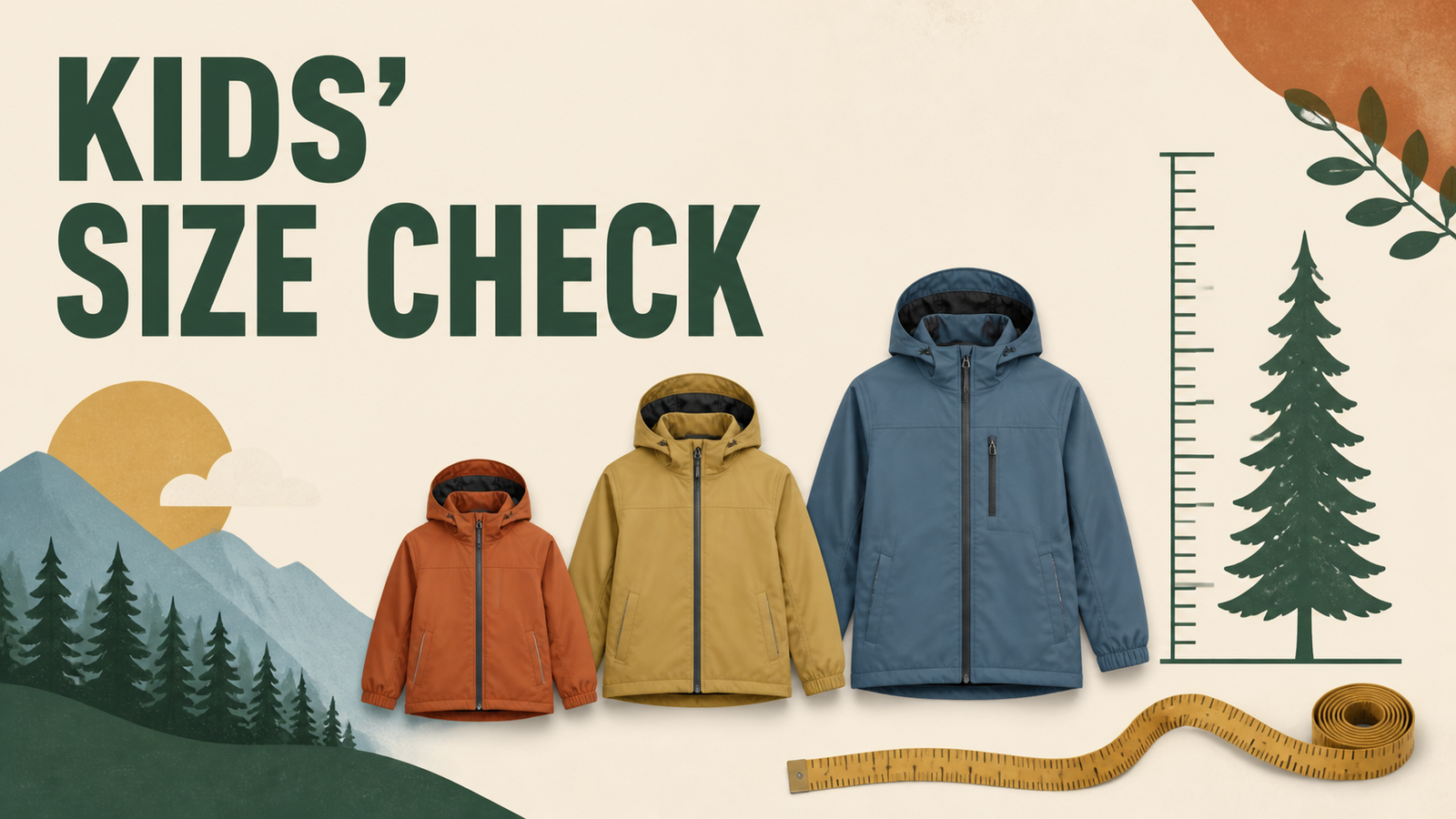
Quick answer: To choose a The North Face Korea kids’ size, compare the exact jacket’s garment measurements with a similar jacket your child already wears comfortably. A label such as 130 is not enough to choose a size. Check sleeve length, room for the intended layers and freedom of movement before deciding between adjacent sizes.
This is a measurement and shopping guide based on the linked official product information, not a hands-on fit test. We have not measured or tested the children’s jacket below. Product ranges and availability can change.
Start With the Exact Product, Not the Child’s Age
Korean kids’ listings can use labels such as 100, 110, 120, 130, 140, 150 and 160. Children with the same height or age can have different chest, torso and arm proportions. The label identifies a size option; it does not tell you the finished jacket’s dimensions or how much room it leaves over a sweater.
Official Example: COMPACT Jacket NJ3LS12V
The linked kids’ COMPACT jacket listing is the source example for this guide. Its listed size range includes 100–160 and its product information provides garment measurements. Confirm the current chart before ordering. Do not transfer its measurements to another COMPACT jacket, a fleece or a padded coat just because the size label is the same.
Make a Two-Size Comparison Sheet
Choose a reference jacket of similar thickness that fits your child well. Lay it flat without stretching it. Copy the official chart’s measurement method: a chest circumference and a flat chest width are different quantities. Compare garment measurements with garment measurements; use the child’s body measurements only when the chart explicitly describes body measurements.
| Record this | Reference jacket | Candidate size A | Candidate size B |
|---|---|---|---|
| Full model code and size | Your existing jacket | Copy from listing | Same model, next size |
| Chest: flat width or circumference? | ___ cm; method: ___ | ___ cm; method: ___ | ___ cm; method: ___ |
| Back length, using the chart’s start point | ___ cm | ___ cm | ___ cm |
| Sleeve length, using the same start point | ___ cm | ___ cm | ___ cm |
| Shoulder width, if construction is comparable | ___ cm | ___ cm | ___ cm |
| Planned layer | T-shirt / sweater / fleece | Check room | Check room |
The blanks are a worksheet, not official measurements. Subtract the reference measurement from each candidate measurement to see where the new jacket will be longer or wider. A roomier chest does not compensate for sleeves that are too long. If the listing does not explain its method, ask the seller before treating the numbers as comparable.
Choosing Between 130 and 140: A Decision Example
This is an illustrative decision, not a tested recommendation for a particular child. Suppose the smaller candidate is close to the comfortable reference jacket at the chest and sleeve, while the next size adds length the child does not need. Check the planned sweater first: if it fits comfortably under the smaller option, the larger option is not automatically better value. If neither option matches the child’s proportions, consider another cut instead of forcing a size choice.
There is no universal number of extra centimeters that works for every child and jacket. For a purchase intended several months ahead, measure again near the order date and check the return deadline. Growth cannot be predicted reliably from the size number alone.
Check These Before Removing Tags
- Hands and cuffs: the child can use their hands normally and secure the cuffs.
- Movement: try sitting, reaching forward and lifting both arms over the intended layers.
- Hood: check that it does not obstruct vision when the child turns their head.
- School use: try the jacket with the usual backpack and check shoulder and sleeve comfort.
- Closure: the zipper closes without strain; the hem does not interfere with normal movement.
What to Ask an Overseas Seller
Send the complete model code, color and two candidate sizes. Ask for the model-specific chart, whether its chest figure is a width or circumference, and how sleeve length is measured. Also confirm whether an indoor try-on is allowed, who pays return shipping and when the return period starts. If the seller supplies only an age recommendation, you still lack the garment measurements needed for this comparison.
For adult size labels and Korean measurement vocabulary, use the main Korea size guide. This children’s guide focuses on comparing a reference garment, adjacent sizes and practical movement checks.
Sources and Scope
- The North Face Korea: kids’ COMPACT Jacket NJ3LS12V — the model-specific source example.
- The North Face Korea: kids’ jackets and vests — browse other cuts and product ranges.
Editorial revision: September 27, 2026. We removed repeated advice and added the comparison worksheet. This revision does not claim a new physical test or guarantee current stock or fit.