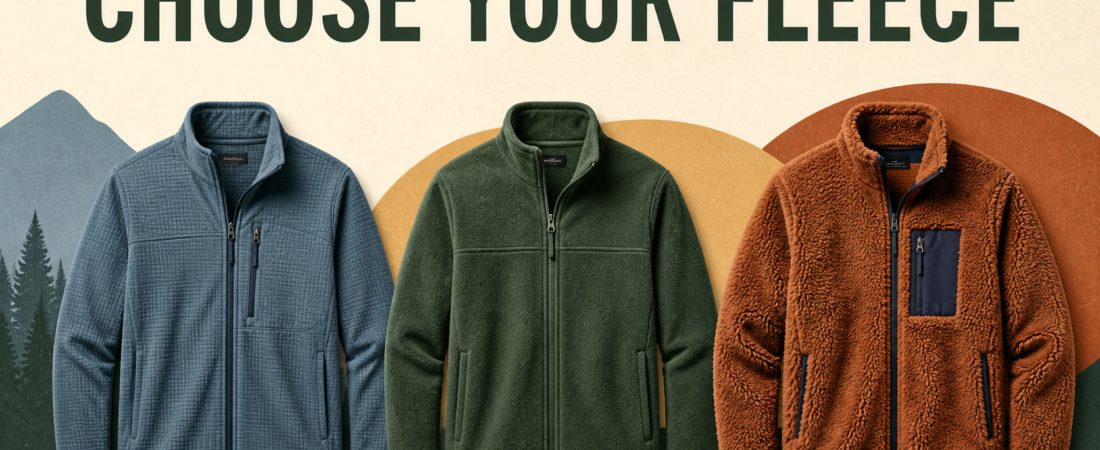
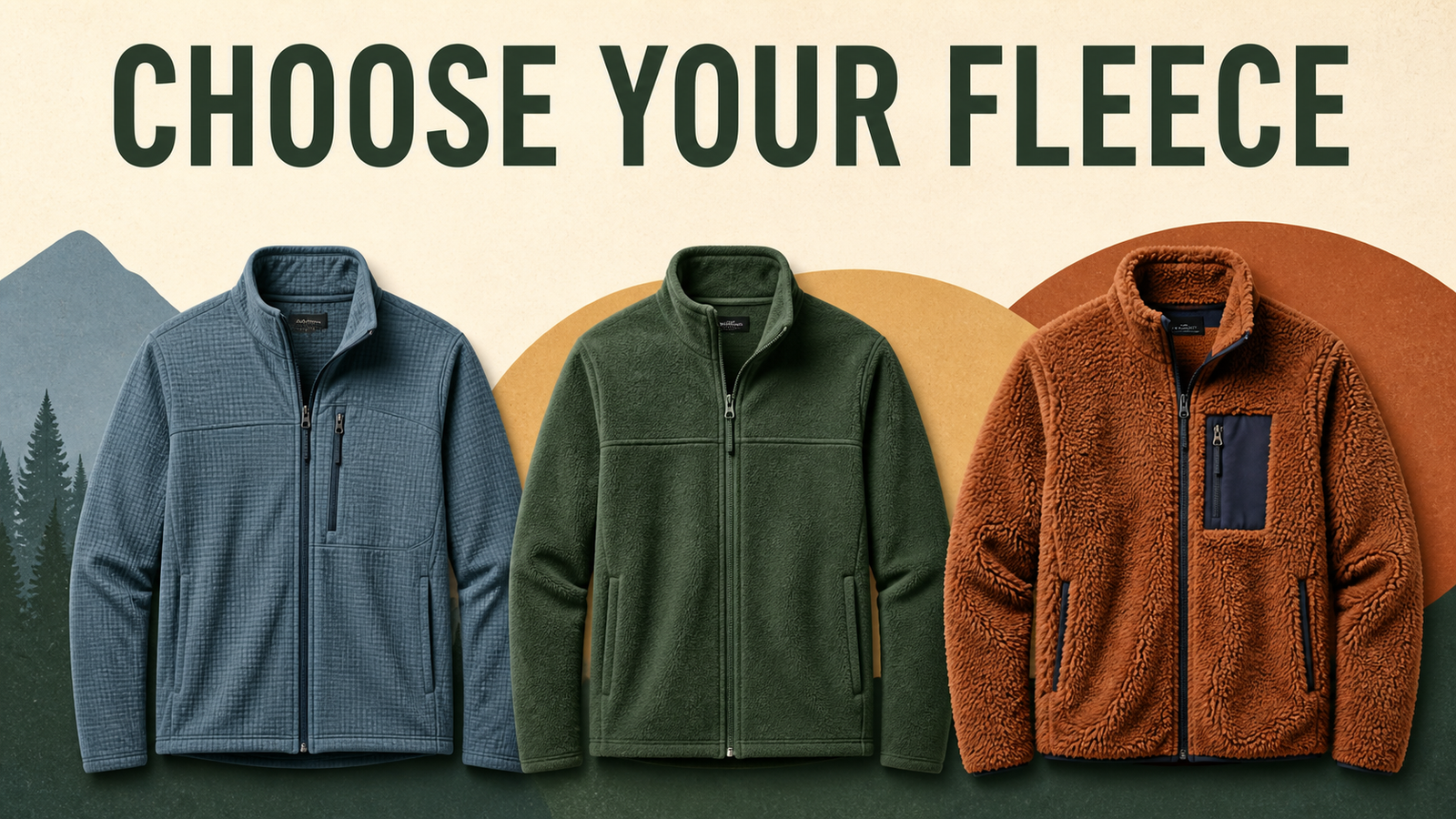
Quick answer: Choose a The North Face Korea fleece by weight, texture and role. Lightweight or grid fleece suits active layering, classic midweight fleece can suit everyday layering, and high-pile fleece emphasizes warmth and casual style. Fleece blocks less wind and rain than a shell, so combine it with weather protection when conditions require it.
Independent shopping checklist, not a hands-on test of Korean fleece models. The North Face’s general US fleece guidance was rechecked on September 27, 2026; it does not establish the specifications of a Korean-market product.
Three Practical Fleece Types
| Type | Best for | Main trade-off |
|---|---|---|
| Lightweight or grid | Active use and layering | Less standalone warmth |
| Classic midweight | Daily wear, travel and versatile layering | Moderate bulk |
| High-pile or sherpa | Warmth and lifestyle styling | Bulkier under a fitted shell |
What to Check on the Korean Product Page
- Fabric composition: identifies listed fibers, but polyester content alone does not establish thickness, warmth or wind protection.
- Actual measurements: important for layering under a shell.
- Fit: regular, loose, cropped and unisex shapes behave differently.
- Pockets and hem: affect everyday use and cold-air control.
- Model code: distinguishes similar seasonal names.
How Fleece Works in a Layering System
Fleece is usually a synthetic, polyester-based fabric that traps air while allowing moisture to move more easily than many dense outer layers. The North Face’s official fleece guide describes it as warm, breathable, lightweight and quick-drying. Those qualities make fleece useful on its own in mild weather and as a mid-layer under a windproof or waterproof shell.
Fleece is not automatically windproof or waterproof. Open, fluffy structures can lose warmth quickly in strong wind. In wet weather, pair the fleece with a suitable outer shell instead of expecting the fleece surface to replace one.
Read the Listing Without Overclaiming
Use this checklist when comparing two Korean listings. Record each exact style code first; a shared collection name does not show that the fabric, lining or fit is identical.
| Information you see | What remains unknown | What to request before ordering |
|---|---|---|
| Polyester percentage | Fabric weight, pile density and wind resistance | Fabric weight if supplied by the maker, plus lining and panel details |
| A plush close-up | Actual thickness and bulk under your coat | Inside and side-view photographs; try the intended outer layer if possible |
| “Warm” or “winter” in the seller title | A tested temperature rating | The manufacturer’s specification, not a temperature inferred from appearance |
| One chest measurement | Whether it is flat width or full circumference | The measuring diagram and sleeve, shoulder and back-length measurements |
| A contrasting woven panel | Whole-jacket waterproofness | An explicit waterproof specification for the exact model if rain protection matters |
| A general brand washing guide | Care instructions for trims and mixed fabrics on this item | A readable photograph of the sewn care label |
Fit Questions Before You Buy
- Will this be an outer layer or a mid-layer?
- Does the official page describe a regular, loose, oversized or women-specific fit?
- Will the collar sit comfortably under your shell?
- Are the sleeves narrow enough to layer but roomy enough to move?
- Does the hem length work with a backpack hip belt or winter coat?
- Are the pockets accessible when another layer is worn?
For online orders, compare flat chest, shoulder, sleeve and total-length measurements with a fleece you own. Do not size up automatically because it is Korean-market clothing; oversized White Label and unisex products may already provide substantial room.
Care That Reduces Pilling and Odor
Check the internal care label first. The North Face’s general fleece guidance recommends a cold, gentle wash, turning the garment inside out to reduce pilling, avoiding fabric softener, air drying and not ironing. Wash fleece only when needed and separate it from rough hardware or hook-and-loop closures that can abrade the surface.
Close zippers, empty pockets and address stains gently before washing. Excess heat can damage synthetic fibers, and fabric softener can leave unwanted residue. If the exact label allows a different method, the product label takes priority over general advice.
Quality Checks in Person
- Look for even pile and secure stitching at cuffs, pocket edges and the hem.
- Check whether zippers move smoothly without catching the fleece.
- Move your arms forward to test shoulder and upper-back comfort.
- Wear the intended shell to check bulk and collar interference.
- Confirm the model code and care label before removing tags.
Illustrative Scenario: One Fleece, Two Different Jobs
A roomy high-pile fleece may be comfortable as an outer layer for a cold café commute, yet feel bulky and restrictive under a fitted rain shell. A thinner stretch fleece may look less warm on the hanger but work better during a steep walk because it moves and releases heat. Neither is universally superior. Try the complete layering system, check how backpack straps affect the pile, and choose the fabric and fit for the activity you will repeat most often.
If shedding, pilling or odor is a major concern, inspect reviews for the exact model and follow the label from the first wash. Product-specific construction matters more than a general fleece category name.
Explore the Korea jacket guide and compare waterproof outer layers in our GORE-TEX vs DryVent guide.
Official Sources
- The North Face — Guide to fleece
- Official Korea jacket and fleece category
- Official White Label category
Editorial revision: September 27, 2026. No product-specific temperature, durability or wash-test results are claimed here. If a listing omits a specification, treat it as unknown rather than borrowing it from a similar-looking jacket.