Quick answer: A The North Face Korea product code is the safest way to identify an exact Korean model. Search the complete code on the official Korean store and match the product name, color, materials, measurements and labels. Do not assume every letter or number has a public, permanent meaning.
Independent guide. Original examples checked in August 2026; NN2PS05A specifications and NJ1DR85C page availability rechecked on September 28, 2026. We are not affiliated with The North Face.
New to Korean hangtags? Our Korean clothing labels guide explains common fields such as 품번, 색상, 사이즈, 판매가격 and 제조국명.
Why the Product Code Matters
Names such as “Compact Jacket” can return in multiple seasons, colors and specifications. The complete Korean model code is a more precise lookup key. Official product references used in this guide include codes such as NJ3NR57B, NJ1DR85C and NJ3LS12V as lookup keys. The NJ1DR85C page was unavailable when rechecked on September 28, 2026; it is not a current size or stock reference.
What a Code Can—and Cannot—Tell You
The code can lead you to an exact official page and help distinguish similar listings. It can support a comparison of color, materials, dimensions and season. It cannot, by itself, prove that the physical item in front of you is authentic. Counterfeit listings can copy a real code.
This guide does not rely on an unverified universal decoder for every character. Patterns may be used internally for categories, seasons or variants, but they can change. Avoid online charts that promise to decode every position without an official source.
Five-Step Verification Method
- Copy the complete code from the product tag, RFID sticker or listing.
- Search the official Korean site using the full string.
- Match the product: English/Korean name, color, pocket layout, materials and size options.
- Match the measurements on the exact official page, not a generic chart.
- Keep the evidence: receipt, tags, packaging and intact RFID label.
Useful Real-World Examples
| Official code | Official product | What it demonstrates |
|---|---|---|
| NJ3NR57B | Men’s MARI-ON Jacket | Use the exact model’s measurement table; do not transfer its sizing to other jackets. |
| NJ1DR85C | Women’s LOFTY Down Jacket | The linked page was unavailable on September 28, 2026. Current size options and stock could not be verified. |
| NJ3LS12V | Kids’ COMPACT Jacket | A kids’ product reference, not evidence that adult and children’s size numbers are interchangeable. |
Photographed Korean Hangtag Examples
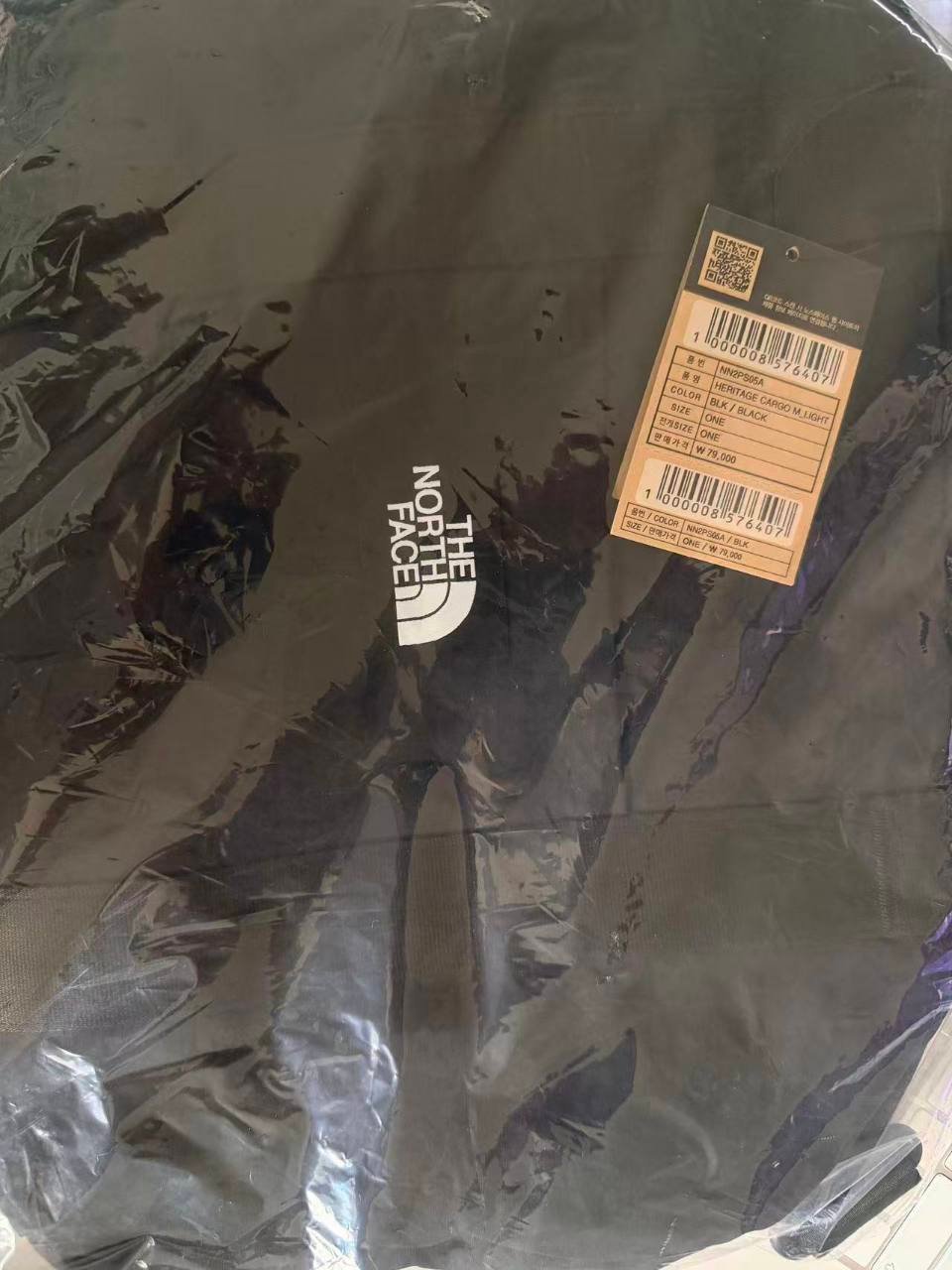
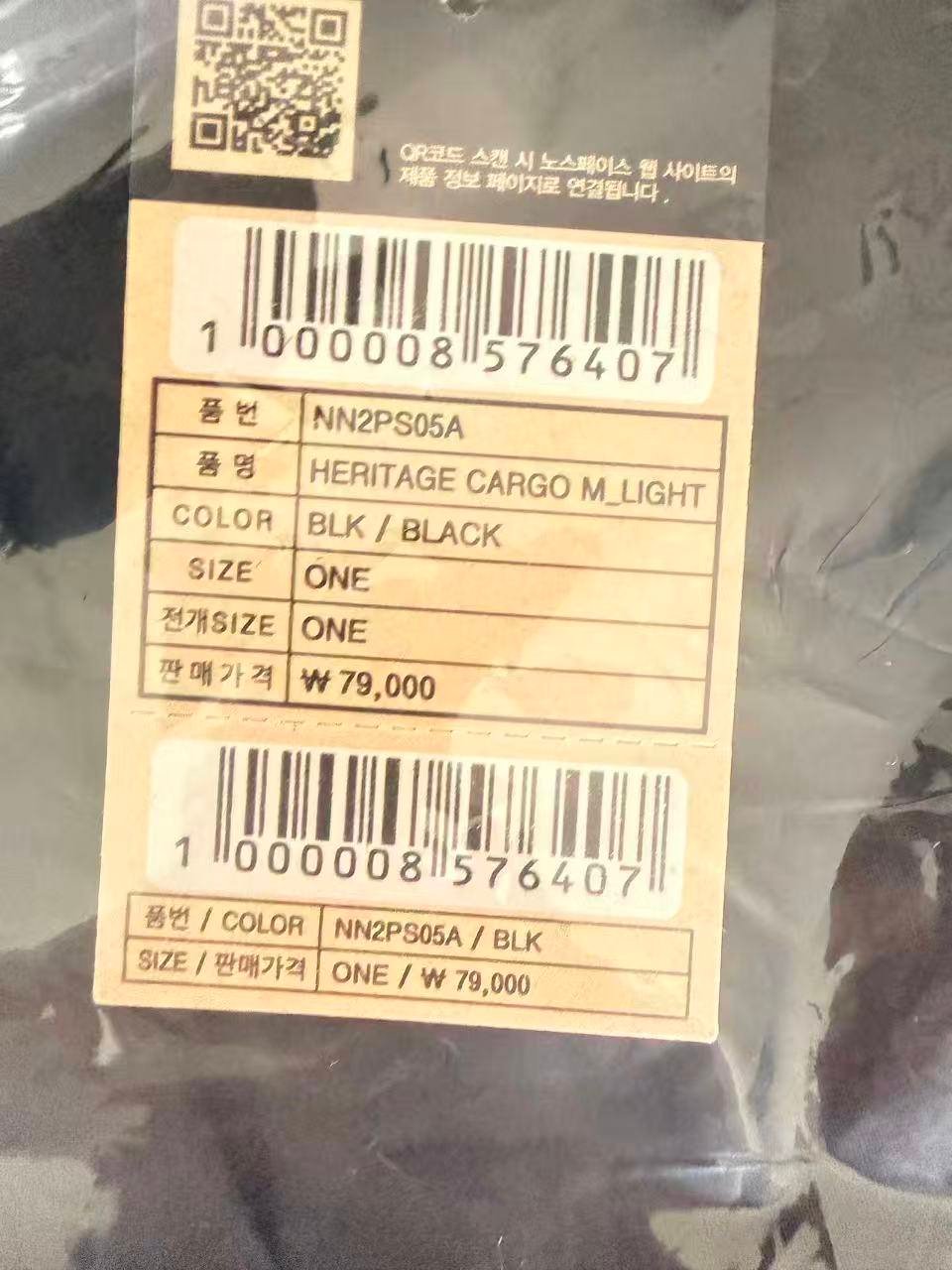
These photos were taken during Korea-based product handling. They show how a model code, color, size and Korean retail price appear together on physical hangtags. These are label observations, not wear tests, capacity tests or an authentication service. A matching tag alone does not prove authenticity.
NN2PS05A — Heritage Cargo M Light
The photographed hangtag lists model NN2PS05A, color BLK / BLACK, size ONE and a Korean retail price of ₩79,000. The official Korean product page was rechecked on September 28, 2026: it identifies HERITAGE CARGO M_LIGHT, BLACK, ONE, with listed measurements of 39 × 28 × 18 cm. It displayed a ₩79,000 list price and ₩63,200 sale price at that check. The printed tag price is not a live purchase quote, and these are official listed measurements, not our own measurements. This is a useful example of matching a physical tag to an official page using the complete code.
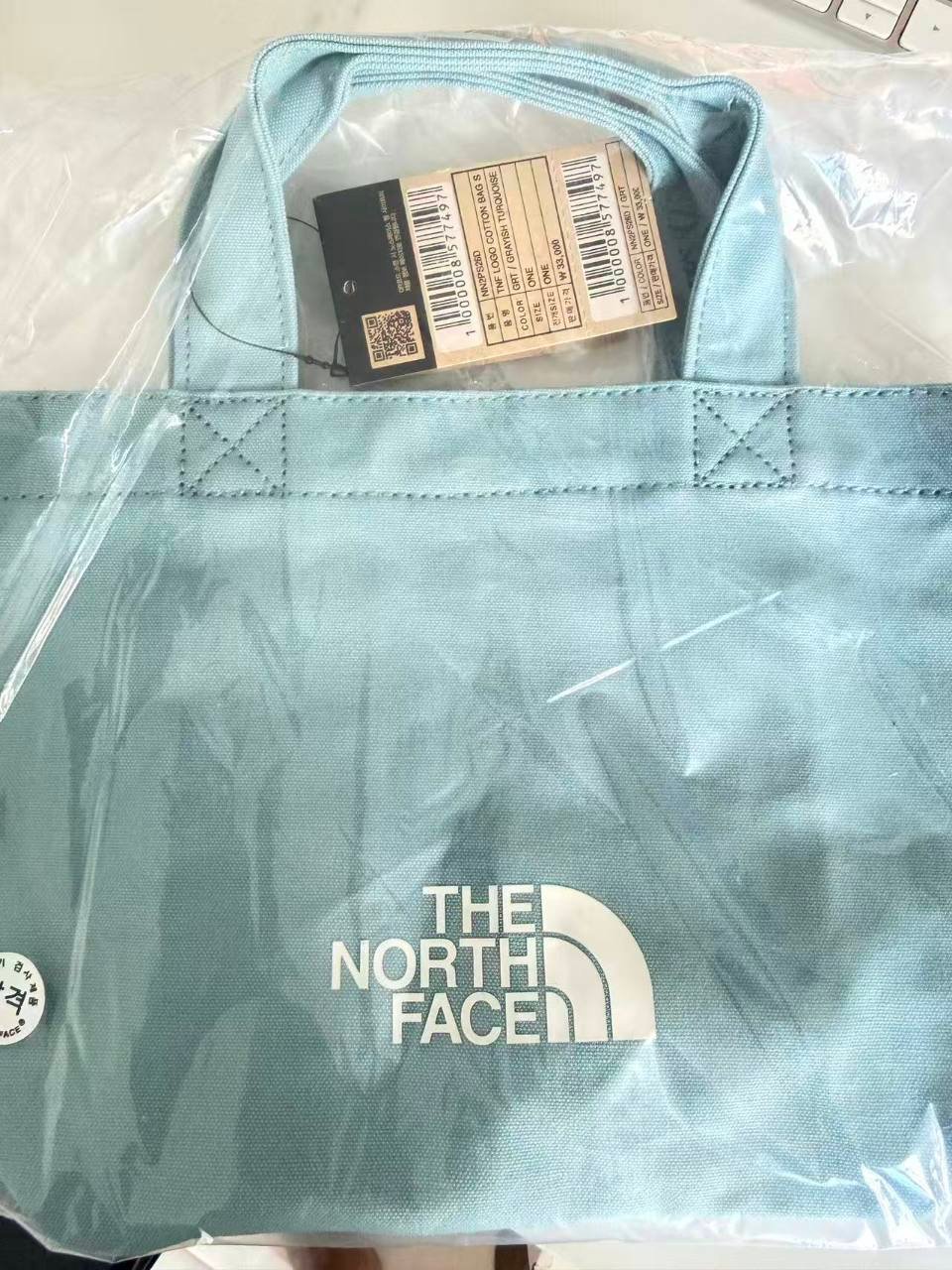
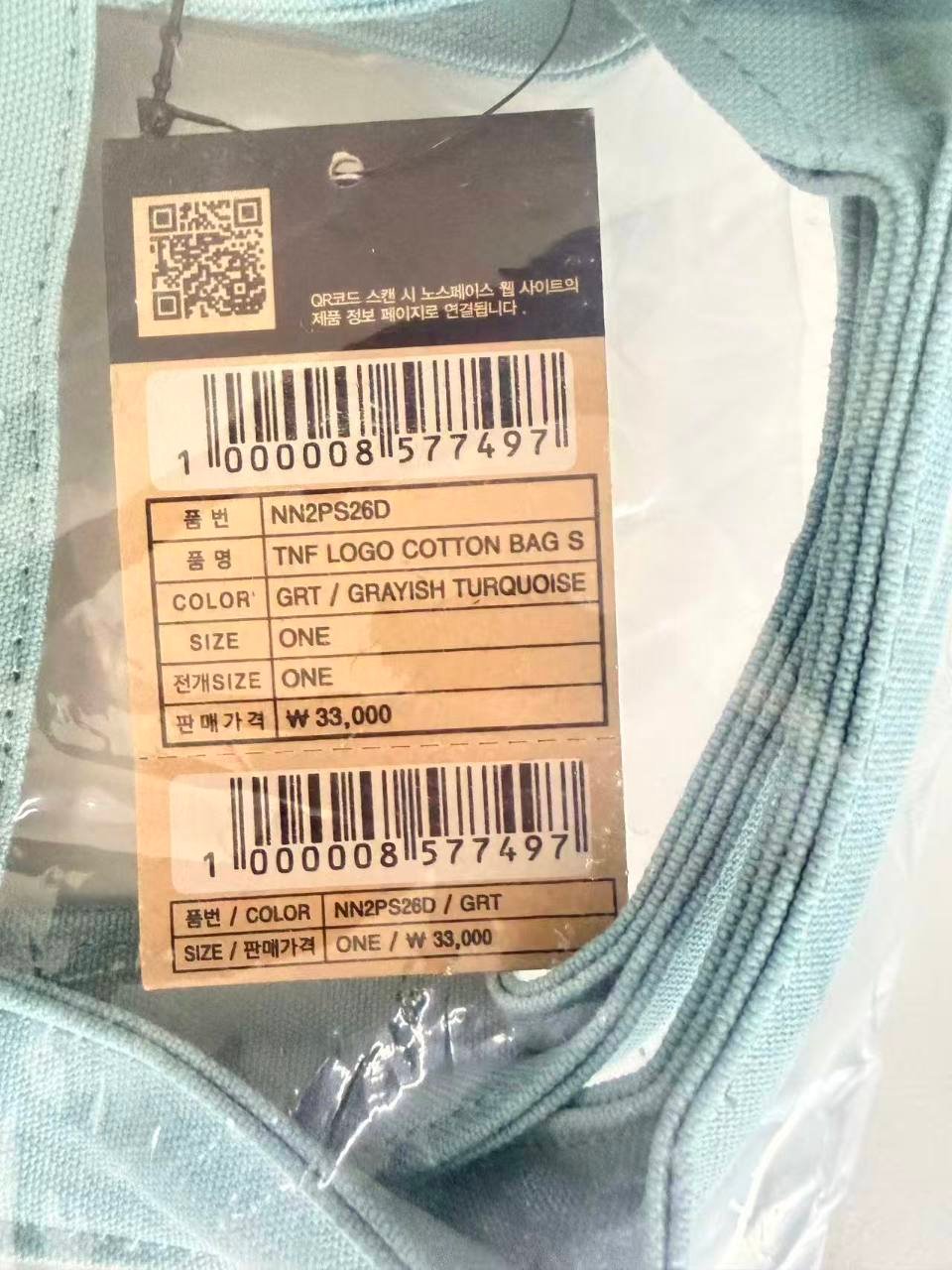
NN2PS26D — TNF Logo Cotton Bag S
The photographed hangtag lists model NN2PS26D, color GRT / GRAYISH TURQUOISE, size ONE and a Korean retail price of ₩33,000. These fields are transcribed from the photographed tag. Keep the final D when searching this exact code, but do not infer that D means grayish turquoise across other products. A general search-results page is not a substitute for an exact model record or current stock confirmation.
Important: a real model code can be copied. Use the code to identify the product, then also check the seller, receipt, construction, RFID label and return policy.
Red Flags
- The listing hides the code or shows only a cropped tag.
- The code opens a different color, material or product type.
- The seller says the code alone proves authenticity.
- The RFID sticker is removed before the return period ends.
- Measurements are copied from another season or region.
Continue with our authenticity checklist and Korea size guide.
How to Read a Korean Product Page
An official Korean product page normally gives you several pieces of evidence at once: the style code in the URL or product information, a Korean product name, an English product name, color information, selectable sizes, materials and detailed images. You do not need to translate every sentence to perform a useful match. Start with the fields that should be identical.
- Model identity: the complete code and product name should describe the same type of item.
- Color: compare both the written color and the visual details. Lighting can shift color, so do not rely on one photo.
- Size range: distinguish the product’s documented size range from options currently available to buy. A sold-out or hidden option does not establish that the tagged size was never produced.
- Materials: compare shell, lining, insulation and membrane information where shown.
- Construction: check front and rear logos, pockets, panels, zipper shape and hardware.
Why Official Links Sometimes Stop Working
Fashion product pages are not permanent archives. A style can sell out, move to an outlet section or disappear when a season ends. Sometimes the URL still loads but says that the product cannot currently be found. That does not by itself make an older item suspicious. It simply means you need more evidence.
If the original page is unavailable, search the full code in quotation marks and look for consistent results from the official Korean site, established department stores and reputable retailers. Compare several independent photos. A cached search snippet or old retailer page can support identification, but it should not be treated as stronger evidence than the physical labels, purchase receipt and construction details.
Model Code, Color Code and Size Are Different Fields
Buyers often combine these into one long string and then search the wrong part. The model or style code identifies the product family or specific variant used by the retailer. A color code separates colorways. The size tells you which unit of that product you are looking at. Their exact layout can change across categories and seasons, so avoid inventing a universal decoding rule from a few examples.
A code is most useful as a lookup key, not as a secret formula. Record the model code, written color and tagged size separately. An unavailable product page leaves those details unconfirmed; it does not justify filling them in from a similar jacket or a different regional version.
A Safer Marketplace Message
Before paying, ask the seller for one photo that shows the entire care label and another that shows the outer product next to a handwritten date or order note. This reduces the chance that the listing uses copied catalog photos. Then send a concise request: “Please confirm the full model code, color, tagged size, purchase source and return policy if the item differs from the photos.”
When the code matches but another detail does not, pause. It may be a listing mistake, a different colorway, a season update or a counterfeit. The code narrows the investigation; it never replaces the investigation.
Example: One Mismatch Does Not Explain Itself
Imagine that a jacket’s tag code opens an official black jacket, while the seller offers beige. Possible explanations include a wrong listing code, a separate color suffix, a tag attached to the wrong item or a counterfeit. Do not choose the explanation that feels most convenient. Ask for the complete tag, color code and receipt, then compare pockets, panels, lining and size options. If the seller cannot resolve the mismatch, use the return policy or do not buy. Product-code research works best when it prompts specific questions instead of automatic conclusions.
Bottom Line
A product code is the fastest way to move from a vague marketplace title to a specific product investigation. Copy it exactly, open the matching official page, and compare the color, size range, materials and design. If the official page has expired, use several consistent records and inspect the physical item. A matching code is strong identification evidence, but seller reliability, receipt history and construction details are still required for an authenticity decision.
Worked Check: When the Exact Page Is Unavailable
On September 28, 2026, the linked NJ1DR85C page returned a message that the page could no longer be viewed. This establishes only the state of that URL at the time of checking. It does not establish worldwide discontinuation, authenticity or a current size range.
- Copy NJ1DR85C exactly; do not silently replace the final letter with a similar search result.
- Ask for the actual item’s complete hangtag and care-label photos, plus seller purchase-source information. Personal receipt details can be covered.
- Record what each source establishes: the tag’s size, the label’s composition and origin, and a dated listing’s historical description. Manufacturing country is product-specific, not determined by sale in Korea.
- Leave measurements and current availability unconfirmed until an exact-model record or seller check resolves them. Preserve any return deadline while investigating.