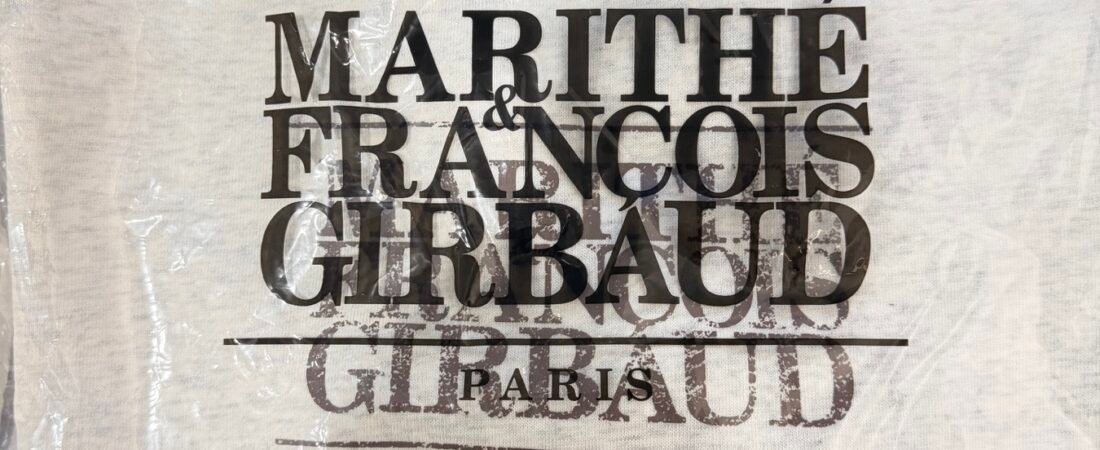
If you buy Marithé François Girbaud products from Korea, the tag can tell you much more than the logo alone. It usually gives you the exact style code, product name, color, size, barcode and Korean retail price. These details are useful when comparing listings, checking whether two items are the same version, or asking a Korean seller for the correct product.
This guide reads two sets of original product photographs supplied to Korean Brand Guide. The photographs show the packaging and removable labels; they are not a fit test, an authentication report or a check of current stock. Prices below are transcribed from the photographed tags.
For a brand-neutral explanation of Korean terms such as 품번, 색상, 사이즈 and 판매가격, see our Korean clothing labels guide.
Important: A convincing tag alone does not prove that an item is authentic. Use the tag together with the seller, purchase channel, product construction and other evidence.
Quick answer
On a Marithé Korea product tag, look for these fields:
- Style code — the exact identifier for that product and variation.
- Product name — the English name used for the item.
- Color — often written in English and sometimes followed by an internal color code.
- Size — such as S or M.
- Retail price — printed in Korean won (KRW).
- Barcode — useful for inventory identification, but not a standalone authenticity test.
- QR or security element — present on some tags; its appearance may vary by season or product.
1. Find the style code first
The style code is the most useful detail when identifying a Marithé Korea product. It is more precise than searching only by a general name such as “gray sweatshirt.”
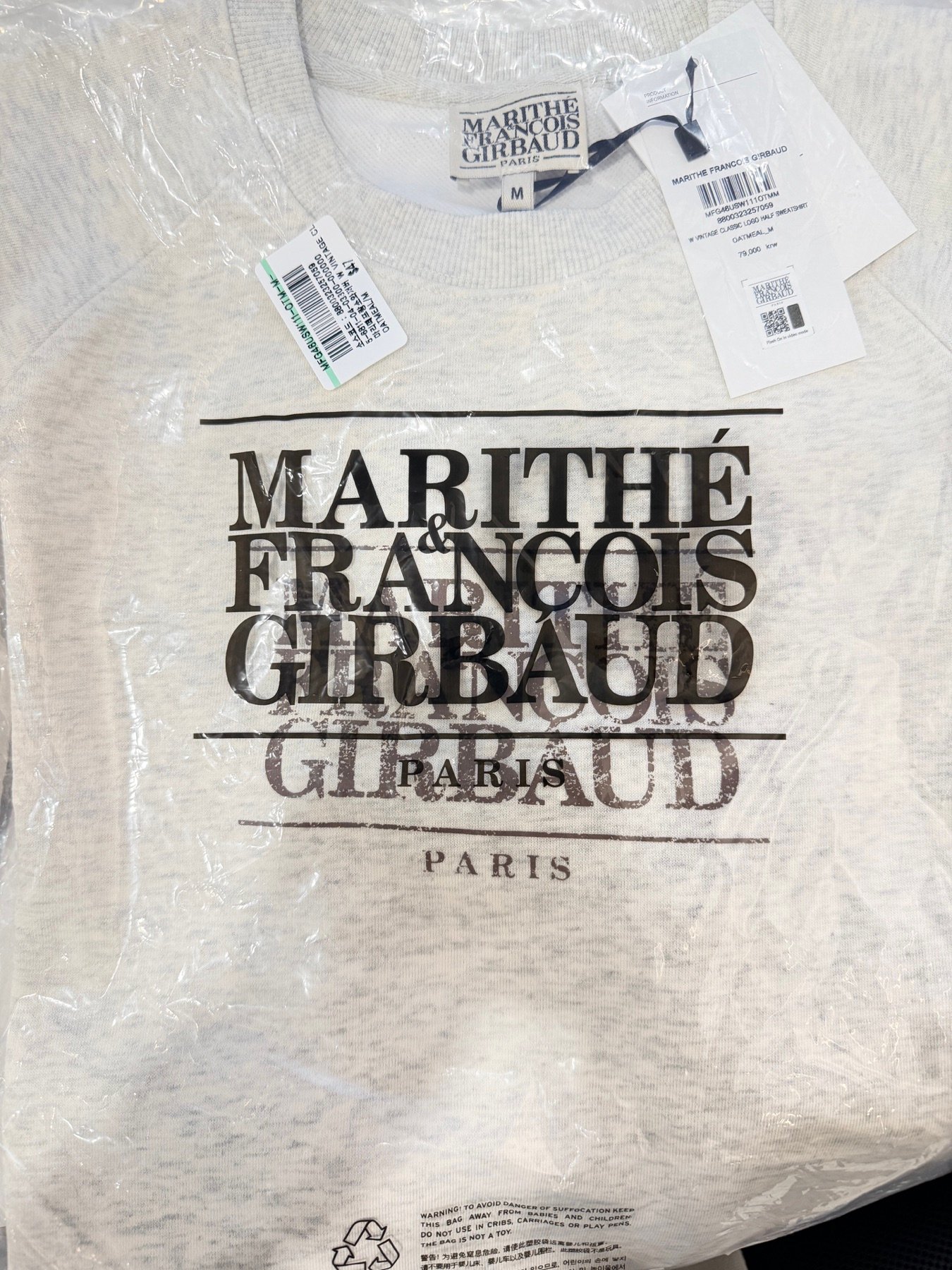
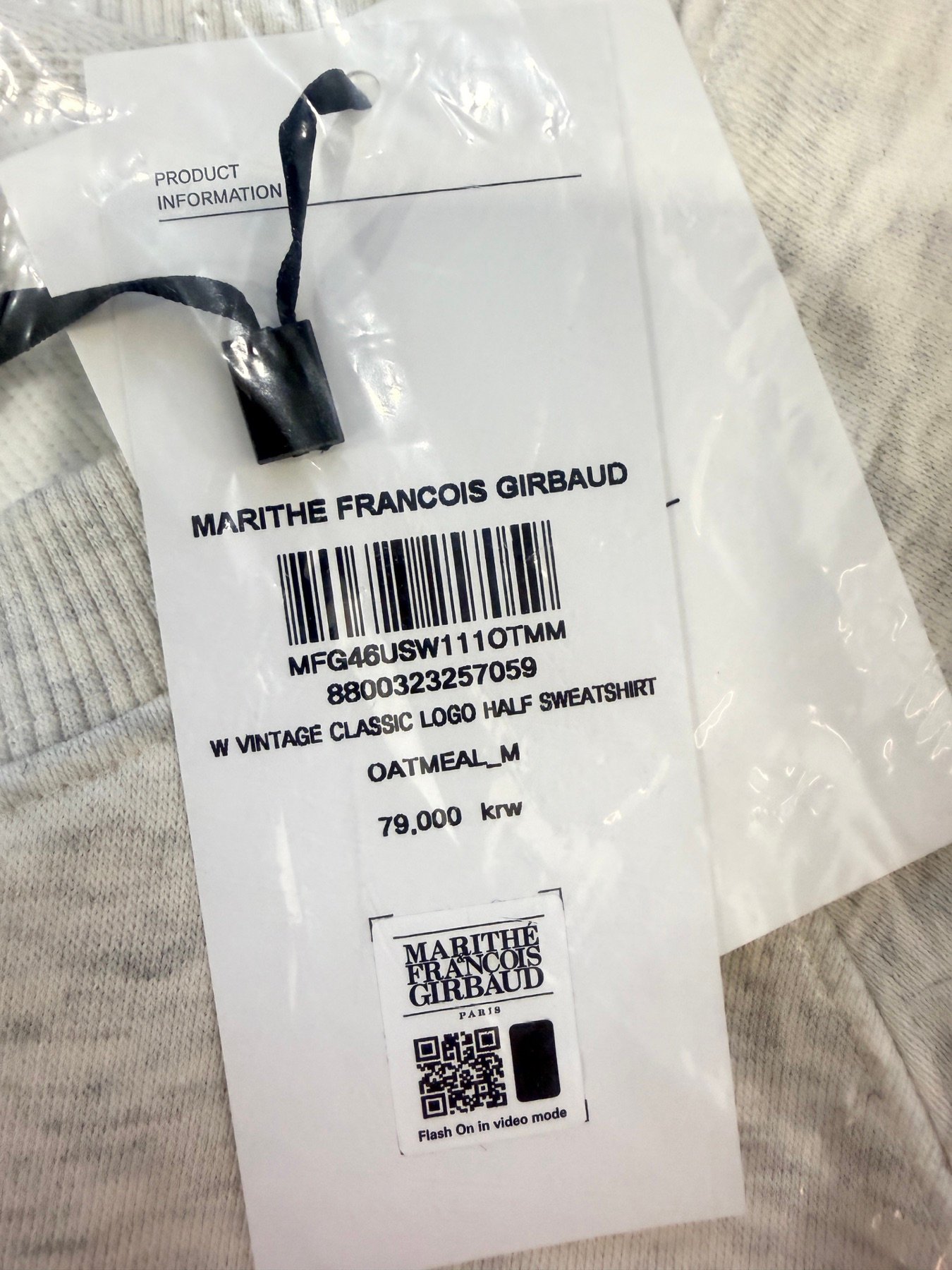
In our first photographed example, the tag shows:
- Style code: MFG46USW111OTMM
- Product name: W Vintage Classic Logo Half Sweatshirt
- Color and size: Oatmeal, M
- Printed retail price: ₩79,000
When contacting a seller, copy the entire code exactly. Do not remove letters or assume that every part of the code has a meaning that applies to all seasons. Product-code formats can change, and one incorrect character may lead to a different item.
2. Match the code with the product name
Next, compare the printed product name with the item in front of you. The product name can help confirm the category and design description.
For example, the words “Half Sweatshirt” identify the first item as a sweatshirt. The word “W” appears in the printed name, but buyers should still check the official size information and actual measurements rather than relying on one letter alone.
If an online listing uses a shortened or translated title, ask the seller for a clear photo of the original tag. The style code and printed name make comparisons much easier.
3. Read color and size as one variation
Color and size are part of the exact variation you are buying. Two products may share the same general design but differ in color or size.
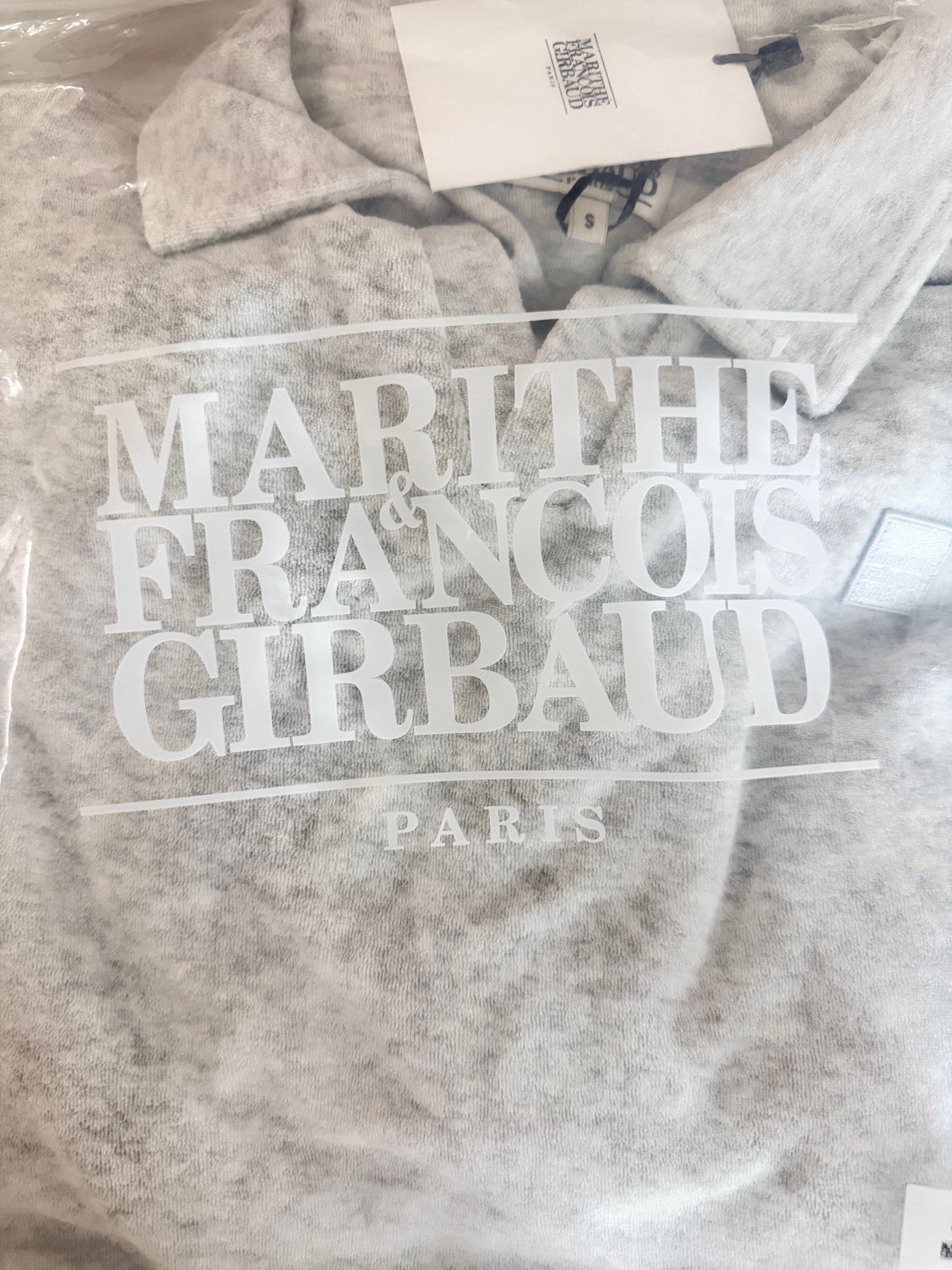
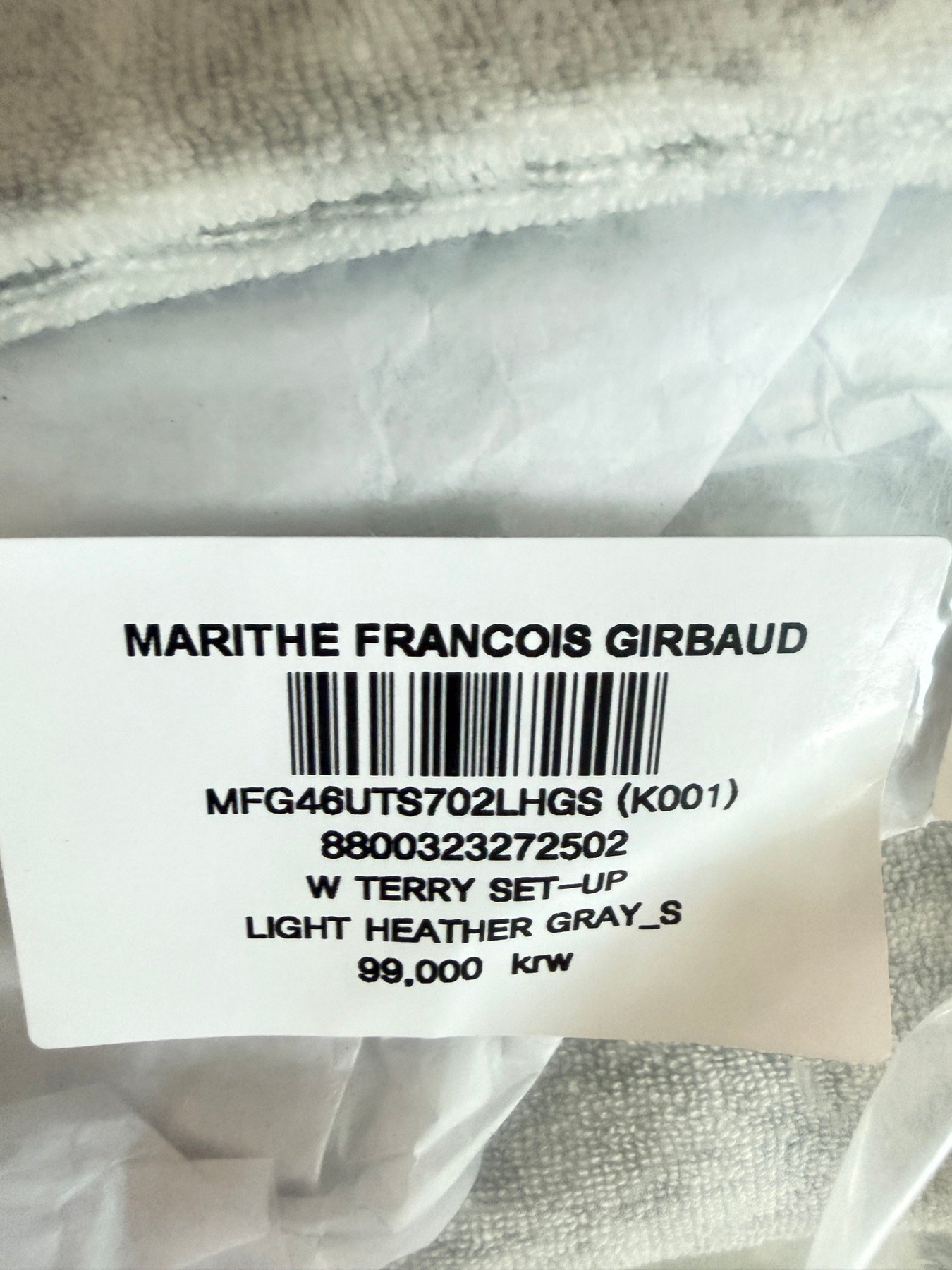
The first example is printed as OATMEAL_M, meaning the photographed item is the oatmeal color in size M. A second photographed product shows:
- Printed code line: MFG46UTS702LHGS (K001)
- Product name: W Terry Set-Up
- Color and size: Light Heather Gray, S
- Printed retail price: ₩99,000
Keep LIGHT HEATHER GRAY_S as printed when asking a seller about this variation. The additional (K001) is visible on the label, but these photographs do not explain its meaning; we do not decode it as a season, country or authenticity marker.
“Set-Up” is the printed product name, not evidence of the package contents. The folded-product photograph does not establish whether a listing includes a top, bottoms or multiple pieces. Confirm exactly which pieces are included before ordering. Likewise, S and M do not establish finished garment measurements or how the two different products compare in fit.
4. Understand the printed Korean price
The price printed on the tag is the Korean retail price assigned to that product at the time the tag was produced. It is written in Korean won.
In the photographed examples:
- W Vintage Classic Logo Half Sweatshirt: ₩79,000
- W Terry Set-Up: ₩99,000
The printed price is a useful reference, but it is not always the amount a buyer will pay. Official promotions, department-store discounts, outlet pricing, tax refunds, resale markups, international shipping and currency conversion can all change the final cost.
Do not treat a lower sale price as automatic evidence of a fake product. Likewise, a tag showing the expected retail price does not by itself guarantee authenticity.
5. What the barcode can and cannot tell you
The barcode is primarily an inventory identifier. It helps stores and distributors track products, but shoppers should not use barcode appearance as a single pass-or-fail authenticity test.
A safer comparison process is:
- Check that the style code is printed clearly.
- Match the product name, color and size to the item.
- Compare the tag with the sewn-in labels and overall construction.
- Check where the item was purchased.
- Ask for the original order or store receipt when appropriate, with personal information hidden.
Counterfeit packaging can copy barcodes and printed prices, so context matters.
6. What about the QR code or security patch?
Some Marithé Korea hangtags include a QR code and a security-style element. These can be useful supporting details, but buyers should avoid assuming that every genuine item must have exactly the same tag design.
Packaging and label layouts may differ by season, category or production period. A missing or different-looking QR element is a reason to investigate further, not enough evidence for a final conclusion by itself.
Use the brand’s official website as a starting point for product information and its notice board for brand announcements. A retailer’s claim to be official should be checked against a current brand statement, not inferred from a familiar-looking tag. The links below do not verify the authenticity or current availability of these photographed items.
7. A practical checklist for online buyers
Before buying a Marithé Korea item from an online seller, request:
- One full photo of the product
- One close photo of the hangtag
- One photo showing the style code and product name
- One photo of the sewn-in care or size label, if available
- Proof of the Korean purchase channel with personal data covered
Then compare the information across all photos. The product, tag and seller’s description should tell the same story.
What These Photographs Do Not Establish
- Manufacturing country and fiber percentages: the shown removable tags do not provide a complete inside-label record. Do not infer “Made in Korea” from the Korean retail channel or “cotton” from the fabric’s appearance.
- Fit: the size letters identify these examples, but there are no measured chest widths, lengths or try-on results here. Ask for measurements for the exact code and size.
- Current price and stock: ₩79,000 and ₩99,000 are printed label prices. They are not live quotations or a ranking of value.
- Security verification: the visible QR/security-style area has not been scanned or validated for this guide. Its appearance alone is not a verification result.
A Specific Question to Send a Seller
I am checking MFG46UTS702LHGS (K001), W Terry Set-Up, LIGHT HEATHER GRAY_S. Does your listing include one garment or multiple pieces? Please confirm the exact contents and send the inside material/origin label and measurements for the size being sold.
For the oatmeal item, use MFG46USW111OTMM and OATMEAL_M instead. Keep the full printed code rather than guessing which suffixes can be omitted. If you need help interpreting a readable label, send a free product-information inquiry; this is not an authentication service or a guarantee of availability.
Related Marithé guides
- Marithé François Girbaud Korea Guide
- Is Marithé François Girbaud a Korean Brand?
- Marithé Korea Size Guide
- Where to Buy Marithé in Seoul