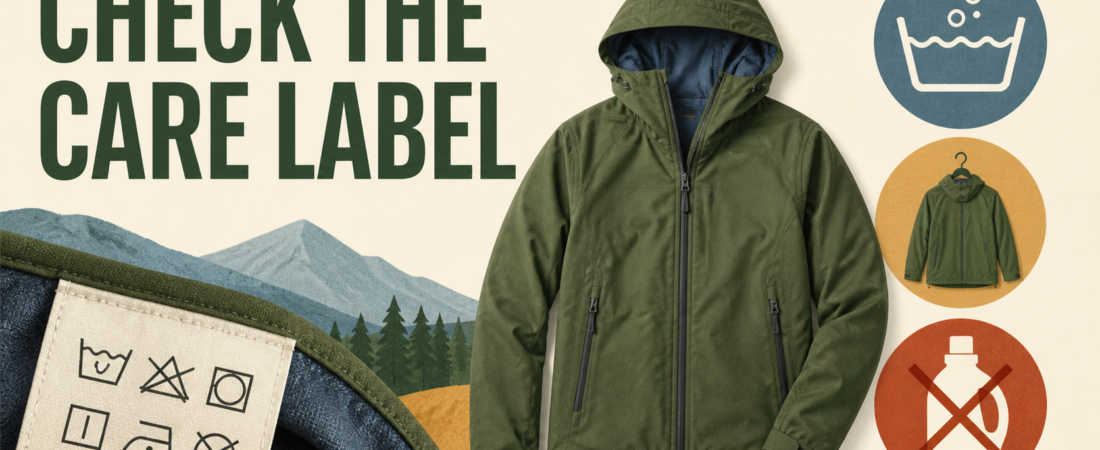
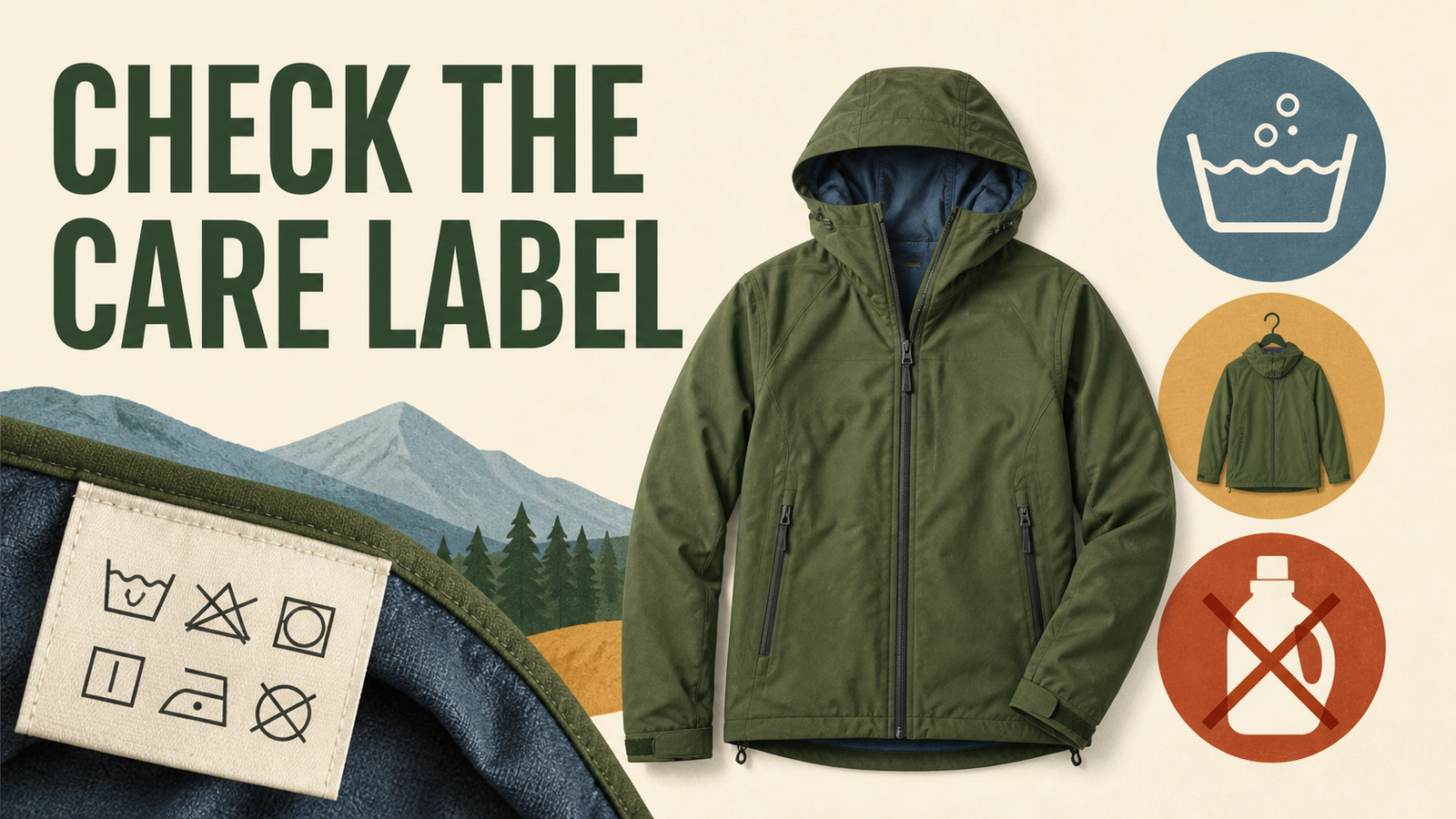
Quick answer: Read the sewn care label before washing any The North Face Korea jacket. Close zippers and hook-and-loop tabs, remove loose dirt, use only the permitted cleaner and cycle, rinse thoroughly, and dry exactly as the label allows. Waterproof shells, down jackets and fleece need different treatment.
Independent care-reference guide, not a wash test of Korean-market jackets. The sources below are general US and UK guidance; the sewn label for your exact product takes priority.
Identify the exact garment with our product-code guide, and compare waterproof technologies in GORE-TEX vs DryVent.
Identify the Jacket Before Washing
The same brand name can appear on a waterproof shell, down parka, synthetic insulated jacket, fleece or mixed-material lifestyle piece. Their care needs are not identical. Start with the internal care label and the exact product code. If the label conflicts with general online advice, follow the product label or request product-specific guidance from the manufacturer.
- Read every care symbol and written instruction.
- Identify the shell, lining and insulation materials.
- Check for waterproof membranes, seam tape, coated logos or bonded details.
- Inspect damage before washing; a loose seam or peeling layer may worsen.
- Remove detachable accessories only when the label or product design allows it.
Waterproof Shell: Only Use Methods the Label Permits
- Brush off dry mud and empty every pocket.
- Close the main zipper, pocket zippers and hook-and-loop tabs so they do not snag.
- Use the temperature, detergent type and cycle stated on the care label.
- If machine washing is permitted, use the specified cycle and rinse instructions. A hand-wash-only label is not permission to use a machine’s gentle cycle.
- Air dry, or use low heat only when the care label specifically permits it.
- After drying, test water beading. Restore the water-repellent finish only with a suitable method and product.
Official regional guidance is not worded identically everywhere: some pages refer to technical-wear cleaner or mild powder, while GORE-TEX care pages may specify a small amount of liquid detergent. This is another reason the sewn-in label for your exact jacket must take priority.
Down: Decide Whether Home Cleaning Is Appropriate
Down becomes heavy and clumped when wet, and incomplete drying can lead to odor or loss of loft. The North Face’s general product-care guidance says down products are best professionally cleaned by a specialist in down items. If your exact label permits home washing, use the labeled method and make sure the item dries completely.
- Do not use ordinary dry cleaning unless the product instructions approve it.
- Avoid harsh detergent, bleach and fabric softener.
- Support the wet garment when moving it; wet down is heavy.
- Break up clumps gently during a label-approved low-heat drying process.
- Do not store the jacket until the fill is completely dry and evenly lofted.
Fleece: Check Mixed Materials and Trims Too
The North Face’s fleece guide recommends a cold, gentle wash, turning the garment inside out to reduce pilling, avoiding fabric softener, air drying and not ironing. Close zippers and keep fleece away from abrasive hook-and-loop closures or rough items in the same load.
Fleece often dries quickly, so high dryer heat is usually unnecessary. If the exact care label allows a dryer, follow its temperature limit. Wash only when needed and treat local stains gently to reduce repeated abrasion.
What Water “Wetting Out” Means
A waterproof jacket’s outer face may stop forming droplets and begin to look saturated. This is called wetting out. It can make the jacket feel colder and less breathable, but it does not automatically mean the waterproof membrane has a hole. Dirt, body oils and a worn durable water-repellent finish are common contributors.
Clean the garment correctly first. Only use heat activation or a compatible treatment when the exact product’s care instructions permit it. Do not copy an ironing or tumble-drying instruction from another region’s generic guide onto a no-iron or no-tumble-dry garment. If water is entering through damaged fabric, delamination or failed seam tape, seek repair or warranty advice rather than adding more treatment.
Drying and Storage
- Dry every layer completely before storage.
- Do not leave a wet jacket compressed in a bag.
- Store down loosely rather than tightly packed for long periods.
- Keep garments away from direct high heat and open flame.
- Use a clean, dry and ventilated storage space.
- Inspect waterproof seam tape and coatings before the next season.
When to Stop and Ask a Professional
Pause before washing if the care label is unreadable, the jacket combines leather or delicate trims, the waterproof layer is peeling, or the down product has heavy contamination. Contact The North Face or a cleaner experienced with the exact material. A cautious inspection costs less than damaging an expensive jacket through a generic recipe.
Make a Label Record Before Starting
Photograph every side of the sewn label before it becomes wet or folded. Record these six points in one place: exact style code; shell and filling materials; whether washing is allowed; permitted temperature and method; drying restrictions; ironing or professional-cleaning restrictions. A fiber percentage by itself does not answer the other questions.
If any instruction is unreadable or appears to conflict with an online guide, stop and send the complete label photos and model code to the manufacturer or an experienced cleaner. Ask about the specific uncertain action—for example, whether tumble drying is permitted—not simply whether the jacket is “washable.” A missing label is not permission to use a generic recipe.
Official Sources
Editorial revision: September 27, 2026. Official US product-care and fleece references were rechecked. These references are not evidence that every Korean-market jacket permits the same washing or drying method.