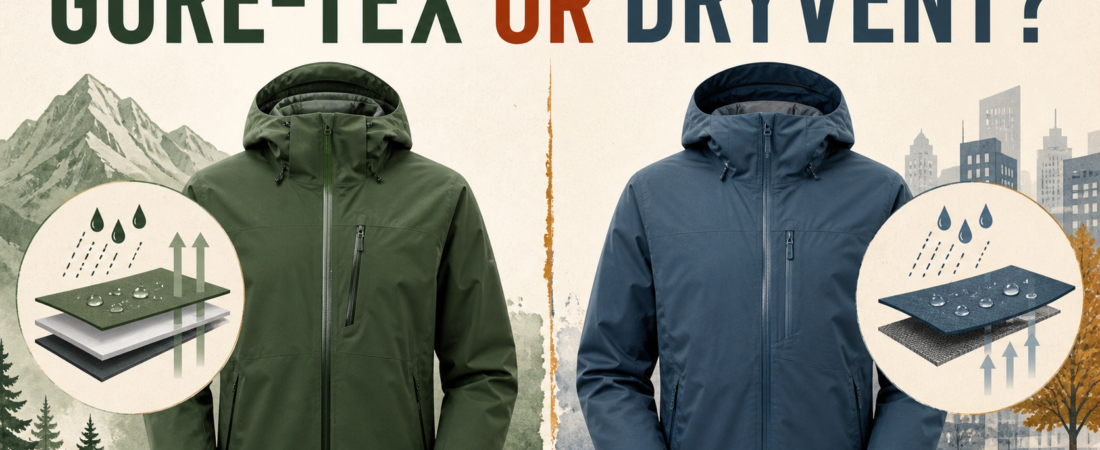
Quick answer: Choose by the exact jacket and use case, not the technology name alone. Both GORE-TEX and DryVent products are designed for waterproof, windproof and breathable protection. DryVent spans 2-, 2.5- and 3-layer constructions; GORE-TEX uses W. L. Gore membrane technologies. Construction, seam sealing, face fabric, ventilation, fit and care determine the real experience.
Independent guide. Technology and current Korean categories were checked in August 2026.
GORE-TEX vs DryVent at a Glance
| Question | GORE-TEX | DryVent |
|---|---|---|
| Technology owner | W. L. Gore membrane technology used in TNF products | The North Face proprietary waterproof technology |
| Construction | Varies by exact GORE-TEX product | Officially offered in 2L, 2.5L and 3L forms |
| Best choice | Exact model that fits your severe-weather and durability needs | Exact model matching everyday, packable or high-performance use |
| Must check | Model specs, seams, fit, ventilation and care label | Layer type, specs, seams, fit, ventilation and care label |
The Layer Construction Explained
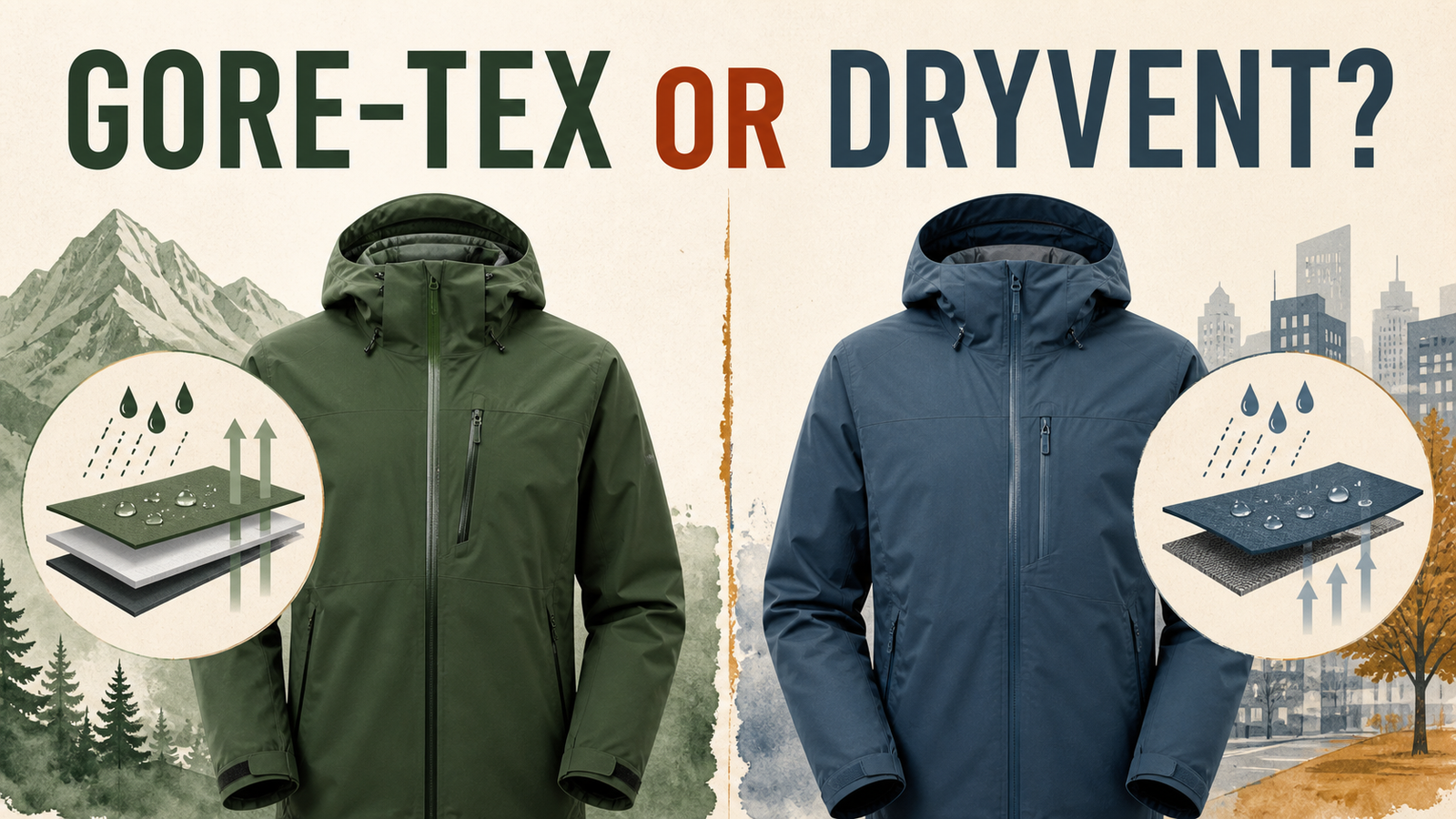
The North Face describes DryVent as a waterproof, windproof and breathable technology built around a polyurethane coating, a water-repellent face finish and seam sealing. The official guide separates it into 2-layer, 2.5-layer and 3-layer constructions. These labels describe how the waterproof component and protective layers are assembled; they are not simple scores from worst to best.
- DryVent 2L: designed as a versatile everyday construction and normally paired with a separate lining.
- DryVent 2.5L: lighter and more packable, with a printed or textured protective inner surface instead of a full lining.
- DryVent 3L: bonds the outer, waterproof and inner protective layers for durability and demanding use.
The North Face describes GORE-TEX using a microporous membrane bonded with selected fabrics and linings. The membrane is intended to stop wind and liquid water while allowing water vapor to move outward. The exact garment still matters: fabric weight, vents, fit, hood, pockets and seam construction change the experience.
What “Breathable” Really Means
Breathable does not mean that a waterproof shell feels like an open mesh shirt. Moisture transfer depends on temperature, humidity, exertion, layers underneath and how much airflow the garment provides. In warm rain or during steep climbs, any waterproof shell can feel humid inside.
Use pit zips, front zippers and adjustable cuffs when the product has them. Wear a moisture-managing base layer, and avoid unnecessary insulation during high-output activity. A membrane can support moisture movement, but it cannot compensate for overheating caused by the wrong layering system.
A Better Buying Comparison
- Confirm the exact technology. Do not infer GORE-TEX or DryVent from appearance alone.
- Check the construction. Look for 2L, 2.5L or 3L information and whether the garment is lined.
- Inspect the hood and cuffs. Adjustment can matter as much as membrane choice in wind-driven rain.
- Review ventilation. High-output users may value pit zips or easy front venting.
- Compare weight and packability. A commuter shell and a travel shell solve different problems.
- Check fit over layers. A technically excellent shell that restricts the shoulders is still the wrong choice.
- Read the care label. Long-term performance depends on correct washing and drying.
Which One Should You Choose?
For commuting, school, travel and occasional rain, a well-designed DryVent jacket can be a practical choice. For prolonged exposure or when you specifically want a GORE-TEX garment, compare the exact GORE-TEX model and construction. Neither logo eliminates the need to check seams, ventilation, fit and intended conditions.
Avoid choosing solely by price. A heavier technical shell may be unnecessary for city use, while a light packable shell may not provide the durability or features you want for repeated harsh-weather trips. Write down the activity, expected rain duration, temperature, backpack use and layering before comparing products.
Performance Changes With Care
When water stops beading on the outer fabric, the membrane has not automatically failed. The durable water-repellent finish may be dirty or worn, causing the face fabric to wet out and reducing comfort. Follow the internal care label, rinse detergent completely and restore water repellency only with a product and method suitable for the garment.
If water is entering through damaged fabric, peeling layers or failed seam tape, washing will not repair the structure. Inspect the garment and contact the retailer or manufacturer for product-specific advice. For cleaning steps, see our jacket washing guide.
Example: Commuter Versus Mountain Traveler
A commuter who faces short rain showers may value a comfortable lining, quiet fabric and practical pockets more than minimum weight. A traveler carrying the shell all day may prefer a lighter, packable construction. Someone spending hours in exposed terrain may prioritize durable fabric, a protective hood, compatible layers and robust ventilation. Any of these buyers could find a suitable GORE-TEX or DryVent model. Writing down the scenario first prevents paying for features you will not use—or missing features you genuinely need.
Frequently Asked Questions
Is GORE-TEX always more waterproof?
Do not rank jackets from the name alone. Compare the exact construction, seams, condition and intended use.
Is DryVent waterproof?
The official technology page describes DryVent as waterproof, windproof and breathable.
What do 2L, 2.5L and 3L mean?
They describe how the waterproof construction is built and protected; weight, feel and durability differ.
Why does rain stop beading?
The face DWR may be dirty or depleted. Follow the item’s official cleaning and reproofing instructions.
Does a membrane prevent all internal moisture?
No. Sweat, humidity, temperature and ventilation still affect comfort. Use appropriate layers and vent the shell during high exertion.
Is 3L always the best choice?
No. Three-layer construction can suit demanding use, while lighter or lined constructions may be more comfortable or practical for other activities.